














Walk into any manufacturing facility that takes operations seriously, and you’ll find 5S somewhere on the wall. Shadow boards with tool outlines. Color-coded floor markings. Laminated checklists at every workstation. Signs reminding teams to return equipment, clean their areas, and report anything out of place.
Now ask the operations manager how confident they are that 5S is actually being sustained not just observed on audit day, but genuinely embedded into daily work behavior across every shift, every department, every facility.
The answer, more often than not, involves a long pause.
This is the central problem with 5S as it has traditionally been implemented: the methodology is sound, the logic is unassailable, and the results when properly sustained are transformative. But sustaining it, actually keeping the Sort, Set in Order, Shine, Standardize, and Sustain disciplines alive and measurable across a complex manufacturing operation is where most organizations struggle. Paper checklists go incomplete. Audits happen on a schedule that everyone can anticipate and prepare for. Photo evidence is inconsistent. Corrective actions fall through the cracks. And six months after a 5S rollout that generated real excitement, the workplace has drifted back toward its previous state.
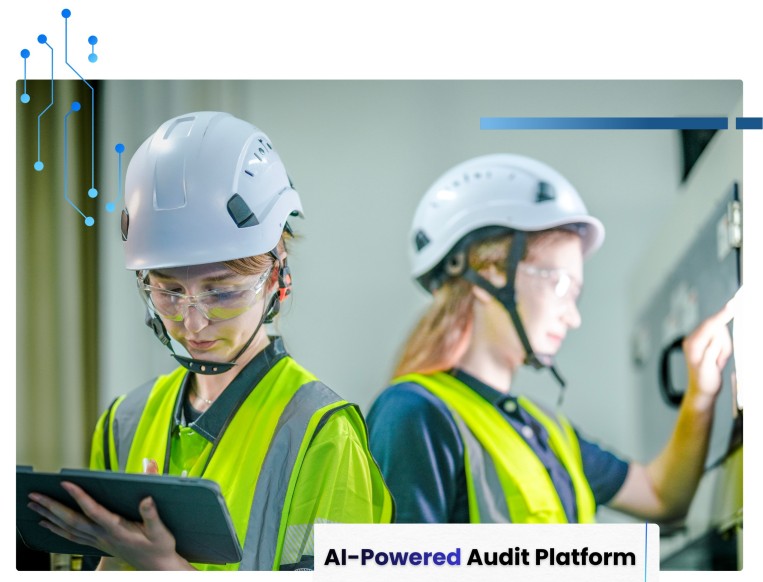
AI-powered 5S audit software breaks this cycle entirely. It turns 5S from a periodic inspection event into a continuous operational discipline, monitored in real time, scored automatically, and driven by intelligent workflows that make accountability unavoidable and improvement measurable.
For manufacturers, logistics operators, healthcare facilities, and warehousing operations across Atlanta from the automotive supply chain in Marietta and Smyrna to the food processing plants in Gainesville, from the distribution centers in Forest Park to the aerospace components manufacturers in the northwest Georgia corridor, the arrival of AI-powered 5S management is not incremental progress. It’s a structural transformation in how lean discipline gets maintained at scale.
This guide covers everything: what AI actually delivers inside a 5S program, the core modules that make it work, the measurable benefits organizations are documenting, the use cases reshaping Atlanta industries, and how Atvatics (atvatics.com) brings all of it together in one unified platform built specifically for operational excellence.
Why 5S Fails Without Technology: The Honest Diagnosis
Before understanding what AI does for 5S, it’s worth being honest about why 5S programs fail without it. Because they fail constantly and the reasons are always the same.
Reason 1: Audits are predictable. When 5S audits happen on a fixed schedule the first Monday of every month, the day before a customer visit teams know they’re coming. Areas get tidied in the 48 hours before the audit and drift immediately after. The audit score reflects preparation, not actual standard. Everybody knows it, and nobody says it.
Reason 2: Paper checklists are unenforceable. A paper checklist submitted by a team leader is a statement of intent, not a record of fact. There’s no way to verify when it was actually completed, whether the conditions observed were accurately recorded, or whether the photo evidence attached reflects the current state or last month’s state. Paper creates the appearance of accountability without the substance of it.
Reason 3: Corrective actions are invisible. When a 5S audit finds a deficiency, a red-tagged item still in an active work area, a storage location without proper labeling, a cleaning responsibility left uncompleted, the finding goes into a spreadsheet or an email and then largely disappears. Follow-up depends on individual memory and relationship dynamics rather than systematic enforcement. Most 5S corrective actions are never formally closed.
Reason 4: Trends are invisible. Without aggregated, searchable data across multiple audit cycles, it’s impossible to identify which areas consistently underperform, which audit categories generate the most findings, which shifts show the largest 5S gaps, or whether the overall program is improving or deteriorating. Leadership sees a score. They don’t see a trend. And without trends, they can’t make strategic decisions about where to invest improvement effort.
Reason 5: Multi-site programs are unmanageable. For organizations operating across multiple facilities, a common situation across Atlanta’s manufacturing and logistics sectors, maintaining consistent 5S standards without a digital platform is essentially impossible. Each facility develops its own interpretation of the standard, its own audit format, and its own reporting cadence. There’s no unified view, no cross-facility comparison, and no shared learning.
AI-powered 5S audit software addresses every one of these failure modes not by adding a layer of complexity to the existing process, but by replacing the fragile, manual infrastructure with a system that makes compliance automatic, accountability unavoidable, and improvement visible.
The Sixth S Nobody Talks About and Why It’s the Most Important One
Ask any lean practitioner to name the five S’s and they’ll rattle them off without hesitation. Sort, Set in Order, Shine, Standardize, Sustain. Clean, organized, labeled, repeatable, maintained. The framework is elegant. The logic is undeniable. The implementation playbook has been refined over decades across thousands of facilities on every continent.
But there’s a dimension of 5S that the original Toyota Production System framework didn’t anticipate not because the people who designed it weren’t brilliant, but because the tools to address it didn’t exist yet.
Call it the Sixth S: See.
Not see in the simple sense of visual management, floor markings, shadow boards, color coding. Those are already embedded in the Standardize dimension. See in the deeper sense: the ability to observe your entire 5S program, across every area, every shift, every facility, every audit cycle simultaneously, in real time, with enough data fidelity to distinguish between a temporary dip and a structural deterioration.
Traditional 5S gives you eyes in one place at one time. A supervisor walking a production floor can see what’s in front of them. An auditor completing a monthly checklist can see what’s present during that specific 30-minute window. A plant manager reviewing a stack of paper audit forms can see an aggregate score a single number that compresses the entire complexity of workplace organization across hundreds of workstations into one figure that means almost nothing by itself.
AI-powered 5S audit software gives you the Sixth S. It gives you the ability to see everything, everywhere, all the time not through human presence, which is finite and expensive, but through data infrastructure that captures, analyzes, and surfaces what matters automatically.
This is the capability that changes 5S from a methodology you implement to a discipline you operate. And for Atlanta’s manufacturing and operations businesses competing in an environment where operational efficiency margins are measured in fractions of a percent, the Sixth S is not a nice-to-have. It’s the competitive differentiator that separates organizations running genuinely lean operations from those running lean theater.

What Happens to 5S Scores Under Pressure and How AI Catches It First
One of the most consistent and least discussed patterns in 5S program management is what happens to compliance scores when production pressure increases.
It’s predictable. When a facility is running normal volumes with standard staffing, 5S scores trend upward. Supervisors have bandwidth to enforce standards. Cleaning schedules are followed. Red-tag areas are managed. Tools are returned to their designated locations. The discipline holds because there’s capacity to maintain it.
Then a major order comes in. Customer demand spikes. Overtime gets scheduled. A key team leader goes on leave and their replacement is focused on production output, not workplace organization. New temporary workers are brought in who haven’t completed 5S training. The production floor is moving faster, the stakes feel higher, and 5S falls three rungs down the priority ladder.
This is when 5S programs erode not because anyone decided to abandon them, but because the organizational pressure that sustains them evaporates precisely when operational pressure is highest. And here’s the cruel irony: high-pressure production periods are exactly when a well-organized, well-maintained workspace delivers the most value. Faster throughput. Fewer errors from poor tool placement. Fewer accidents from cluttered aisles. Fewer delays from missing materials. The ROI of 5S peaks at exactly the moment organizations stop maintaining it.
AI-powered 5S audit software catches this pattern before it becomes a crisis. By analyzing the correlation between production schedule data, staffing levels, and 5S audit scores, the platform identifies the early warning signals of standards drift a two-point score drop over three consecutive audits in a specific area, an increase in the average time corrective actions remain open, a drop in audit completion rates on second and third shifts and surfaces them as alerts before they compound into a significant program deterioration.
For a plant manager in Smyrna running at 140% of normal production capacity with a critical customer delivery window approaching, this early warning capability is the difference between catching a 5S slide in week two and discovering a fully eroded program in week eight after the pressure has passed. The continuous improvement audit platform doesn’t take time off when operations get intense. It watches more closely.
The Hidden ROI of 5S That Never Makes It Into the Business Case
Every 5S implementation business case includes the obvious ROI drivers: reduced time spent searching for tools and materials, fewer workplace accidents, cleaner audit scores, improved customer perception during facility tours. These are real. They’re measurable. And they’re almost always enough to justify the program investment.
What doesn’t make it into most business cases is the ROI that’s harder to quantify but often larger in aggregate: the operational value of a workforce that operates with visual discipline as a daily habit rather than an inspection-day performance.
When 5S is genuinely sustained not maintained temporarily for audits but actually embedded in how people work every day something qualitatively different happens to how teams interact with their physical environment. Problems become visible faster because the baseline of what “normal” looks like is clear and consistently maintained. A missing tool is noticed immediately because its shadow board location is empty. A leaking fitting is caught during a Shine activity before it creates a puddle that becomes a slip hazard. A mislabeled container is flagged during a workstation audit before it contributes to a quality defect.
This is what lean practitioners mean when they talk about “visual management” the idea that a properly organized, properly standardized workspace communicates its own status without anyone having to actively investigate. Problems announce themselves because the environment is structured to make abnormalities immediately visible.
The continuous improvement audit platform accelerates the development of this capability by building the data foundation that makes visual discipline measurable and improvable over time. When teams can see their 5S scores trending upward on a dashboard, when their department’s performance is visible alongside other departments’, and when improvement is recognized and celebrated with the same formality as production output achievements, the cultural dimension of 5S begins to self-reinforce.
Teams that score well feel ownership of their scores. They start managing their areas proactively rather than reactively. They report findings before auditors do. They train new team members on standards without being asked. The lean workplace organization tools stop being an external compliance requirement and start being an expression of team identity.
This cultural shift is the real ROI of a sustained 5S program and it doesn’t show up in a spreadsheet. But it shows up every day in how your facility operates, how your team members engage with their work environment, and how your customers experience your operation when they walk through the door.
The Auditor Calibration Problem and Why It Matters More Than You Think
Here’s a challenge that every organization running a multi-auditor 5S program eventually confronts, and that almost none of them address systematically: different auditors score the same conditions differently.
It’s not dishonesty. It’s human variability. One supervisor looks at a workstation where tools are 80% returned to their designated locations and calls it compliant because the intent is clearly there. Another looks at the same workstation and marks it non-compliant because the standard is 100% and 80% is not 100%. One auditor photographs a storage area from an angle that makes it look tidy. Another photographs the same area from the angle that reveals the disorganization behind the front row.
Over time, these individual scoring tendencies create a data quality problem that corrupts the trend analysis your 5S program depends on. A department’s score improvement might reflect genuine improvement or it might reflect the fact that the auditor assigned to that department this month is a more generous scorer than the auditor who covered it last month. A facility’s consistently high scores might reflect excellent 5S discipline or a culture where auditors and supervisors have developed an informal understanding about what gets recorded.
AI-powered 5S audit software identifies auditor calibration variance automatically. By analyzing scoring patterns across auditors evaluating similar area types, the platform flags statistically significant scoring differences, auditors whose scores for equivalent conditions are consistently above or below the population average and generates calibration training recommendations.
When photo evidence is submitted and compared against historical evidence from the same location, AI can identify whether current conditions are materially better, worse, or equivalent to previous audit cycles, providing an objective reference point that calibrates human judgment rather than replacing it.
For organizations running 5S implementation for manufacturing programs across multiple facilities with dozens of designated auditors, this calibration function is the difference between a data set that reflects genuine operational reality and one that reflects individual auditor personality. Only the former can drive real improvement decisions. Only the former gives leadership the confidence to act on what the data shows.
The best digital 5S checklist software doesn’t just collect scores, it validates them. It ensures that a 78 in Facility A means the same thing as a 78 in Facility B, and that this month’s score is genuinely comparable to last month’s. Without that consistency, the entire data infrastructure of your 5S program is built on a foundation that shifts with every auditor rotation.
From Compliance Obligation to Competitive Weapon: The Strategic Case for AI-Powered 5S
The organizations that get the most out of 5S the ones where it becomes a genuine competitive advantage rather than a compliance obligation share a common characteristic. They treat 5S performance data the same way they treat production output data: as a key operational metric that leadership reviews regularly, that drives resource allocation decisions, and that connects directly to the financial performance of the business.
In these organizations, 5S scores are on the same dashboard as OEE, on-time delivery, first-pass quality yield, and safety incident rates. When a facility’s 5S performance trends downward, it triggers the same leadership attention as a dip in production efficiency because experienced operations leaders understand that the two are connected. A deteriorating 5S program is an early indicator of deteriorating operational discipline generally. The workplace organization data is a leading indicator for the production performance data that follows.
The lean workplace organization tools that make this possible are not a manufacturing accessory. They’re a strategic information infrastructure. They give leadership the visibility to manage operational culture, not just operational output and to intervene early when the culture that produces strong output starts to weaken.
For Atlanta’s manufacturers and operations businesses competing for customer contracts, managing increasingly demanding supplier codes of conduct, and trying to attract and retain workforce talent in a competitive labor market, a visibly strong 5S program delivers value on multiple dimensions simultaneously. It signals operational maturity to customers conducting facility audits. It creates a safer, more organized workplace that improves employee retention. It reduces the waste and inefficiency that erodes margin. And through the intelligence platform that sustains it, it generates the operational data that drives continuous improvement decisions year after year.
That is not a housekeeping program. That is a competitive weapon.

What AI Actually Does in 5S Audit Management
When people hear AI-powered 5S audit software, the first question is usually: what does AI actually do here? The answer is practical and highly valuable for lean operations.
Intelligent Audit Scheduling
Instead of fixed calendars that teams can anticipate, 5S audit automation uses risk-based scheduling to increase audits in high-risk areas, adjust frequency by production volume, and randomize timing for more accurate audits.
Anomaly Detection Across Audit Data
AI analyzes patterns across completed audits to identify frequent failures, score drops, inconsistent auditors, and areas trending toward decline. This gives manufacturers stronger visibility for lean manufacturing improvements.
Photo Evidence Analysis
Modern AI-powered 5S audit software can analyze audit photos, flagging images that don’t match compliance standards or fail to show meaningful improvement. This turns photo evidence into real verification, not box-checking.
Predictive Scoring
By analyzing historical audits, staffing, maintenance, and production schedules, AI predicts where 5S issues are most likely to appear—helping teams act before failures occur.
Automated Corrective Action Management
Every finding generates a structured action with ownership, deadlines, escalation, and evidence-based closure. Nothing gets lost in spreadsheets, improving accountability and workplace organization.
Cross-Facility Intelligence
For multi-site manufacturers, AI compares 5S performance across facilities, shifts, and departments helping leaders identify best practices and scale improvements faster. This makes AI-powered 5S audit software a critical tool for continuous improvement.
Core Modules of an AI-Powered 5S Audit and Implementation Platform
AI-powered 5S audit software is modular by design, giving organizations the ability to activate the capabilities that match their current maturity level and expand as their program evolves. Here are the key modules:
Module 1: Digital Checklist Builder and Management
The foundation of any 5S audit program is the checklist. This module transforms it from a static paper form into a dynamic, intelligent data collection tool.
Operations teams can build customized checklists for departments, work areas, and facilities—with different criteria for machining cells, warehouse bays, office areas, maintenance shops, or packaging lines. As digital 5S checklist software, each checklist item is weighted by importance, linked to the right 5S principle (Sort, Set in Order, Shine, Standardize, Sustain), and configured with evidence requirements to verify compliance.
Checklists remain version-controlled, so when standards change, updates are pushed automatically across every site while audit history remains traceable. This is critical for 5S implementation for manufacturing where layouts, workflows, and safety requirements evolve continuously.
The platform also supports conditional logic. If an auditor marks an item non-compliant, follow-up verification questions appear automatically, capturing enough detail for stronger corrective action and long-term process improvement.
Module 2: Mobile Audit Execution
This is where AI-powered 5S audit software becomes a true field tool. It transforms audits from a desktop-only process into real-time operational visibility.
Auditors complete 5S audits directly on smartphones or tablets using department-specific checklists, capturing geotagged and timestamped photo evidence, scoring observations instantly, and submitting results in real time—even offline.
As digital 5S checklist software, the mobile interface is designed for speed. A workstation audit that once took 30–45 minutes on paper can now be completed in minutes. That means audits happen more often, cover more work areas, and generate better operational data.
For plant managers overseeing multiple lines, real-time audit visibility is a major shift. Supervisors can submit audits instantly while leadership monitors performance across departments, making it a continuous improvement audit platform and one of the most effective lean workplace organization tools for manufacturers.
Module 3: Scoring and Benchmarking Engine
Raw audit observations only become valuable when they’re translated into clear, comparable scores—and this module does that automatically.
Every completed audit generates structured scores across all five S dimensions, normalized for different area types and checklist lengths. As part of AI-powered 5S audit software, scores are automatically aggregated by department, shift, facility, and audit period, giving leadership a deeper view of 5S performance than spreadsheets can provide.
The benchmarking engine enables cross-facility comparison, helping multi-site manufacturers identify which locations lead in Standardize scores, where Shine gaps persist, and which shifts show the highest variability. These insights directly improve resource allocation and decision-making.
For lean workplace organization tools to create real value, they must surface actionable data that changes operational priorities—and this scoring engine is where that happens.
Module 4: Corrective Action and CAPA Workflow
This module solves one of the biggest weaknesses in traditional 5S programs: corrective actions that get identified but never resolved.
When an issue is logged, the system automatically creates a structured corrective action based on the relevant S dimension, checklist item, and severity level. This makes 5S implementation for manufacturing more accountable and easier to scale. Actions are assigned to the right owner, whether it’s a department supervisor, maintenance team, or quality team. Deadlines are automatically set based on severity.
If deadlines approach without updates, the platform escalates alerts automatically through management levels. Nothing is passive. Nothing gets forgotten. This makes it a strong continuous improvement audit platform for long-term operational discipline.
Closure requires verified evidence, including before-and-after photos submitted through mobile devices. Using digital 5S checklist software, AI compares original and updated conditions, flagging cases where closure evidence does not show meaningful correction. This improves accountability, consistency, and audit accuracy.
Module 5: Trend Analysis and Predictive Intelligence
This is where AI-powered 5S audit software moves beyond recording what happened to predicting what comes next. It transforms 5S from a compliance process into a true continuous improvement audit platform.
The trend analysis engine reviews audit scores across time periods, identifying patterns human reviewers often miss—seasonal score drops during peak production, recurring failures on second and third shifts, corrective actions that fail to sustain results, and facilities where 5S success depends on individuals rather than system-wide discipline.
Predictive intelligence uses these insights to generate forward-looking alerts, warning supervisors when an area is likely to fall below scoring thresholds in the next cycle. This allows proactive action before issues become findings.
For operations leaders managing 5S implementation for manufacturing across multiple facilities, this predictive visibility shifts 5S from reactive audits to strategic improvement planning.
Module 6: Training and Competency Tracking
Sustaining 5S requires every employee to understand standards, and that knowledge must stay current, documented, and verifiable. This module manages training and long-term workforce consistency.
New team members are automatically enrolled in 5S orientation. Role-based training is assigned by responsibility level—operators receive awareness training, team leaders get audit calibration training, and managers receive trend analysis and CAPA training.
Completion is tracked automatically. When training expires, content changes, or employees return after long absences, re-enrollment is triggered. Audit participation is tied to training status, ensuring only qualified personnel are assigned responsibilities.
For manufacturers facing turnover and skill gaps, this strengthens consistency and makes lean workplace organization tools more sustainable across shifts and teams.
Module 7: Leadership Dashboard and Reporting
All operational data flows into this module, giving leadership real-time visibility into 5S performance and measurable improvement.
Plant managers can view overall facility scores, trend charts, open CAPAs, audit completion rates, and heatmaps showing high-risk areas. Multi-site leaders gain cross-facility benchmarking and trend analysis to identify where support is needed.
Executives and quality teams receive board-ready reports automatically, showing program health, safety impact, audit readiness, and efficiency improvements. With digital 5S checklist software, this turns audit data into business intelligence and supports stronger AI-powered 5S audit software adoption across manufacturing environments.
Benefits of AI-Powered 5S Audit Software: The Numbers Behind the Results
Organizations moving from paper-based or basic digital audits to AI-powered 5S audit software consistently see measurable operational gains.
40–60% Reduction in Audit Completion Time
Mobile-first execution with guided workflows, automatic scoring, and instant submission removes manual transcription and reporting delays. With digital 5S checklist software, auditors spend more time observing and less time on paperwork.
3x Increase in Audit Frequency
When audits become faster and easier, organizations naturally move from monthly reviews to weekly or daily spot checks. This makes 5S implementation for manufacturing more proactive and improves early detection of standards drift.
35–50% Reduction in Repeat Findings
Corrective actions with clear ownership, enforced deadlines, and verified closure significantly reduce recurring issues. Problems are fixed permanently—not temporarily.
Improved Cross-Shift Consistency
AI analyzes audit performance by shift, exposing gaps that paper systems often miss. With targeted training and reinforcement, manufacturers commonly reduce shift-to-shift score variability by 40% within the first year.
Better Safety Performance
A well-organized workplace is a safer workplace. By using lean workplace organization tools, manufacturers reduce hazards, improve visibility, and strengthen 5S discipline across active work areas.
Faster Customer and Regulatory Audit Preparation
For ISO 9001, IATF 16949, FDA, or OSHA-driven environments, a structured 5S system makes evidence easier to present. As a continuous improvement audit platform, automated reporting helps teams generate audit-ready evidence in hours instead of days.
Real-World Use Cases Across Atlanta Industries
Quantifiable Waste Reduction
Sustained 5S discipline reduces wasted time spent searching for tools, navigating clutter, and managing avoidable risks. With AI-powered 5S audit software, manufacturers often report 10–20% productivity gains per shift in high-performing areas.
Atlanta’s industrial base is one of the most diverse in the Southeast. Here’s how AI-powered 5S audit software is improving operations across key sectors.
Automotive Manufacturing: Smyrna, Kennesaw, Coweta County
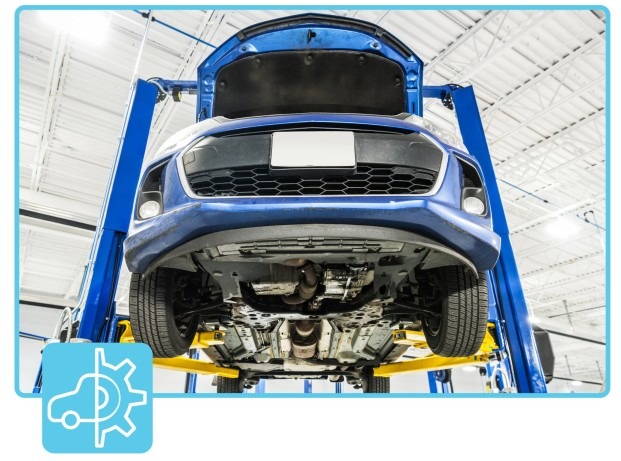
Georgia’s automotive manufacturing sector, supported by OEM assembly plants and tier-1 and tier-2 suppliers, operates under strict quality frameworks like IATF 16949 and customer-specific supply chain standards. These requirements make 5S implementation for manufacturing essential for maintaining workplace consistency, audit readiness, and operational discipline.
Use Case: A tier-1 interior components supplier with two facilities in Kennesaw uses AI-powered 5S audit software to run daily workstation audits across 18 production cells. Supervisors complete mobile inspections before each shift, with photo evidence captured at every checkpoint using digital 5S checklist software.
AI scoring reveals that third-shift Shine compliance scores are consistently 15 points lower than first-shift scores—an issue hidden in paper-based reports. With targeted training and revised cleaning assignments, the gap closes within 60 days.
When the OEM customer performs its annual supply chain audit, the facility presents 14 months of continuous trend data through a continuous improvement audit platform, demonstrating measurable 5S progress and stronger audit readiness.
Food Processing and Packaging: Gainesville, Cumming, Norcross
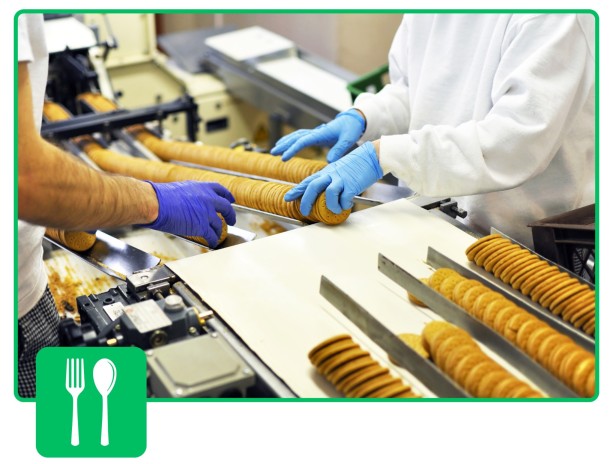
Georgia’s food processing sector, especially poultry processing in Hall County and packaged goods manufacturers around northeast Atlanta, operates under FDA food safety rules, SQF certification, and retailer compliance standards where cleanliness and organization are critical.
Use Case: A food packaging facility in Norcross uses digital 5S checklist software to run hourly Shine audits in allergen-sensitive areas alongside daily full-site inspections. AI anomaly detection shows that contamination risk spikes during shift changeovers, leading to improved cleaning protocols. With AI-powered 5S audit software, SQF renewal prep drops from three weeks to less than two days because evidence is continuously captured and organized.
Aerospace and Defense Manufacturing: Marietta, Cherokee County
Atlanta’s aerospace cluster in Marietta and Cherokee County operates under AS9100 quality standards where workplace organization and visual controls are mandatory.
Use Case: An aerospace components manufacturer in Marietta uses 5S implementation for manufacturing modules to manage tool control integrated with audit workflows. AI predictive intelligence reveals that tool availability issues cluster around production planning changes rather than misplacement. By fixing the root cause, tool search time drops by 22 minutes per shift.
Warehousing and Distribution: Forest Park, McDonough, Fairburn
Logistics facilities around Hartsfield-Jackson and South Atlanta manage high-volume inventory flows where organization directly affects safety, picking accuracy, and throughput.
Use Case: A third-party logistics provider in McDonough uses a continuous improvement audit platform to run zone-based 5S audits across 24 picking and staging areas. Each supervisor owns zone performance while AI-generated trend reports help leadership identify risk areas faster. In six months, picking accuracy improves by 8% in high-performing zones. This makes it one of the most effective lean workplace organization tools for large-scale warehouse operations.
Healthcare Facilities and Medical Devices: Midtown, Peachtree City, Gainesville
5S is not exclusively a manufacturing methodology. Healthcare facilities, medical device manufacturers, and sterile processing departments operate under The Joint Commission, FDA 21 CFR Part 820, and ISO 13485 requirements where workplace organization directly impacts patient safety, sterile field integrity, and regulatory compliance.
Use Case: A medical device assembly operation in Peachtree City producing Class II devices under FDA QSR requirements deploys lean workplace organization tools to manage 5S in its cleanroom and semi-controlled assembly areas. The AI platform tracks every audit, every corrective action, and every training completion, building the continuous evidence record the FDA expects during facility inspections. When the company files a 510(k) for a new device, the documented 5S program contributes to the quality system evidence package submitted alongside the application.
Commercial Construction and Facilities Management: Atlanta Metro
Construction sites and managed facilities, including the major commercial development projects reshaping Midtown, Buckhead, and the Perimeter area increasingly apply 5S principles to site organization, tool management, and safety compliance as part of ISO 45001 occupational health and safety management programs.
Use Case: A commercial general contractor managing concurrent projects in Buckhead and Midtown uses mobile 5S audits to maintain consistent site organization standards across both projects. Subcontractor compliance scores are tracked automatically, with low-scoring subcontractors triggering automatic notification to the project superintendent. The program reduces tool-related work stoppages by 30% across both projects over a six-month period.

Why the Sustain Problem Is the Only Problem That Matters
Every organization can implement 5S. Thousands do it every year with consultant support, with training programs, with enthusiastic leadership launches and photo documentation of the dramatic before-and-after transformation.
The organizations that still have a functioning 5S program three years after launch are a small fraction of those that started.
The reason is always the Sustain dimension: the fifth S, the hardest S, the one that requires not a one-time effort but a permanent change in organizational behavior and management attention. Sort, Set in Order, Shine, and Standardize are implementation activities. Sustain is a cultural commitment. And cultural commitments without structural reinforcement deteriorate under the pressure of daily operational priorities.
This is the problem that AI-powered 5S audit software solves at its deepest level. It replaces willpower and management attention as the primary sustaining force with systematic infrastructure, automatic scheduling, real-time scoring, enforced corrective actions, and continuous trend visibility that makes standards drift immediately visible and operationally unacceptable.
When 5S compliance is visible in real time on a dashboard that plant managers, operations directors, and quality leaders review daily, it stops being a program that exists alongside operations and becomes part of how operations are measured. That integration between 5S discipline and operational performance metrics is what turns a lean initiative into a lean culture.
The continuous improvement audit platform doesn’t just track 5S. It builds the accountability infrastructure that makes 5S sustainable regardless of personnel changes, production pressure, or the natural organizational tendency to deprioritize anything that doesn’t have an immediate operational urgency. The system maintains the urgency. It keeps 5S on the agenda even when a dozen other things are competing for management attention.
Why Atlanta Organizations Choose Atvatics for 5S Audit and Implementation
Atvatics was built for exactly this challenge, providing manufacturers, logistics operators, healthcare facilities, and operations-intensive businesses with a unified platform that brings 5S, audit management, compliance, quality inspection, safety, and operational performance into one connected system.
The Atvatics 5S Audit Software delivers every capability described in this guide, mobile-first audit execution, AI-powered scoring and trend analysis, automated corrective action management, cross-facility benchmarking, training and competency tracking, and real-time leadership dashboards, inside a platform that also connects to your audit management, compliance, quality inspection, and safety programs.
This integration matters. Because 5S findings don’t exist in isolation. A 5S deficiency in a chemical storage area is also a safety finding. A 5S gap in a quality-critical production area is also a quality management concern. A pattern of 5S audit completion failures by a specific team leader is also a training and competency issue. When all of these programs live on one platform, these connections are visible and the organizational response is coordinated rather than fragmented.
Atvatics is headquartered in Alpharetta, Georgia deep inside the same manufacturing and operations ecosystem it serves. The team understands what Georgia’s industrial businesses need, how their auditors work, what their customers’ quality requirements look like, and what operational constraints shape how 5S programs are run on real shop floors rather than in consulting presentations.
The platform is mobile-first, cloud-native, and designed to deliver value quickly not after a 12-month implementation. Organizations can deploy the 5S module, complete their first AI-powered audits, and start seeing trend data within days of going live.
Your 5S Program Deserves Better Infrastructure
If your 5S program is built on paper checklists, monthly audit schedules, and spreadsheet-based corrective action tracking, it’s not failing because your team doesn’t care. It’s failing because the infrastructure isn’t designed to sustain a continuous improvement discipline at the pace and complexity modern operations demand.
AI-powered 5S audit software gives your program the structural reinforcement it needs to move from a periodic inspection event to a genuine operational standard, one that’s maintained not through management heroics but through systematic, intelligent automation.
Digital 5S checklist software that runs on every supervisor’s phone, scores automatically, and routes findings to named owners instantly. 5S implementation for manufacturing platforms that turn cross-facility performance comparison from a monthly exercise into a daily reality. Lean workplace organization tools that surface the trends no paper-based program could ever detect. A continuous improvement audit platform that keeps 5S on every manager’s dashboard every day, not just audit day.
All of it is available. All of it is deployed. And all of it is waiting at Atvatics.
Ready to Build a 5S Program That Actually Sustains?
The gap between the 5S program you have and the 5S program your operations deserve has never been smaller or easier to close.
Visit www.atvatics.com today to book a live demo of the Atvatics 5S Audit Software. See how mobile-first audits, AI scoring, automated corrective actions, predictive trend intelligence, and cross-facility dashboards work in a real operational environment tailored to your facility type, your industry standards, and your team’s workflow.
Whether you’re a plant manager in Kennesaw running IATF audits, an operations director in McDonough managing a multi-site logistics network, a quality leader in Norcross maintaining SQF certification, or a facilities director in Midtown building a lean culture from the ground up, Atvatics gives you the tools to sustain what you’ve built, measure what matters, and improve continuously.
Schedule your demo today. Build a 5S program that works on day 365 not just day one.